The quiet rise of a Made-in-Bangalore brand, shaping café culture and community — one outlet, one scoop, one story at a time.
By Aditya Mendonca | Raintree Media Features | The Good City Dispatch – Life in Bangalore
My first memory of Zaid goes back to 2019. We were at Bangalore Club — I was deep in conversation with Karthik Raju and Raja Arjun about why businesses should optimise their presence beyond social media, particularly through tools like Google My Business. That afternoon, we stepped into a quiet new café that had replaced the once-iconic Café Coffee Day. I was also working on Innovate Bengaluru at the time at Raintree Media .
The café was called Zed The Baker. One coffee and one croissant at a time, it was beginning to draw attention. That’s when I met the founder — a soft-spoken young man who introduced himself as Zaid Sait . He wasn’t there to pitch. He was there to observe, serve, and build something lasting. That very space was the birthplace of a now-regular favourite — the croissant sandwich, found across all his outlets today.
After the pandemic, while many struggled to bounce back, Zaid not only retained his team — he expanded. One of his most significant moves was into the historic Bowring Institute. The interiors in the heritage wing remain some of the most thoughtfully designed in the city: minimal, functional, and steeped in the character of the venue. There he was again — not giving interviews or grand launches, but quietly watching how people ordered, lingered, and returned.
He soon launched Rice Café, a nod to B. L. Rice, the institute’s founder in 1868. Not long after came Le Melt, an artisanal ice cream and gelato brand started with just two employees — now present in outlets across Bangalore. From that single café to 14 and counting — including locations in Church Street, Cunningham Road, Road, Prestige Trade Tours, Forum South, Indiranagar, KGA, Bowring Institute and more — Zaid’s journey is one of focused, intentional growth.
He began in B2B, but soon found that the model lacked long-term sustainability. The real turning point came when he shifted to B2C, beginning with that tiny but pivotal space at Bangalore Club. The late VG Siddhartha even took notice, and, as Zaid later shared, encouraged him to make the most of the opportunity.
What stands out about Zed The Baker is not just the product — it’s the process. Every store has been designed without architects or templates. There’s no centralised design language, no duplication. Each space is crafted individually, drawing from the character of its location.
During the pandemic, while others downsized, Zaid doubled down. He retained his team and leaned into digital. By using platforms like Petpooja, he has kept operations lean — managing each outlet’s billing, menus, and vendor flows with just ₹20,000 of tech infrastructure per store. No expensive point-of-sale systems, no unnecessary overheads.
As a proud Cutchi Memon, Zaid runs his business with a strong ethical core. He adheres to a zero-interest model of financing — growing mindfully, sustainably, and with long-term values. That mindset reflects in the details — from the team culture to the product to the way his customers engage with each space.

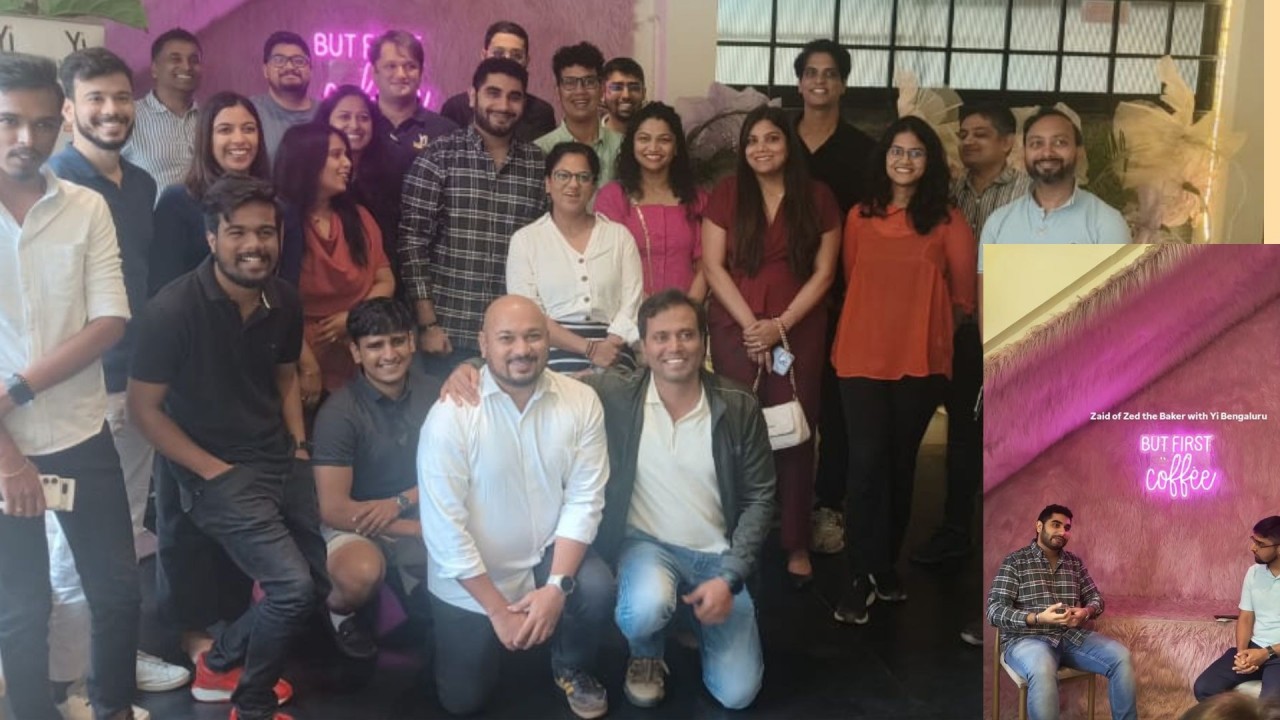
A special thanks to CII Young Indians Bengaluru chapter for hosting this Saturday morning’s conversation on 12th Main, Indiranagar — right beside the CII Karnataka office. And to Yusuf Rafique of HALT Popular Foods Co co-host for the session. Bangalore doesn’t make noise. It makes impact. And Zed The Baker is one more reason to believe in the city’s quiet, resilient spirit. This is The Good City. Thank you for reading.

Stay in the Loop For more stories from the heart of Bangalore’s community, culture, and creators: Subscribe to The Good City Dispatch — your weekly guide to life in the city.
✱ [Subscribe here] (Insert your newsletter signup link) ✱ Follow on Instagram: @thegoodcityy ✱ Join the WhatsApp community: Life in Bangalore https://chat.whatsapp.com/DBckOVUVmtg5i32JaeAvtE